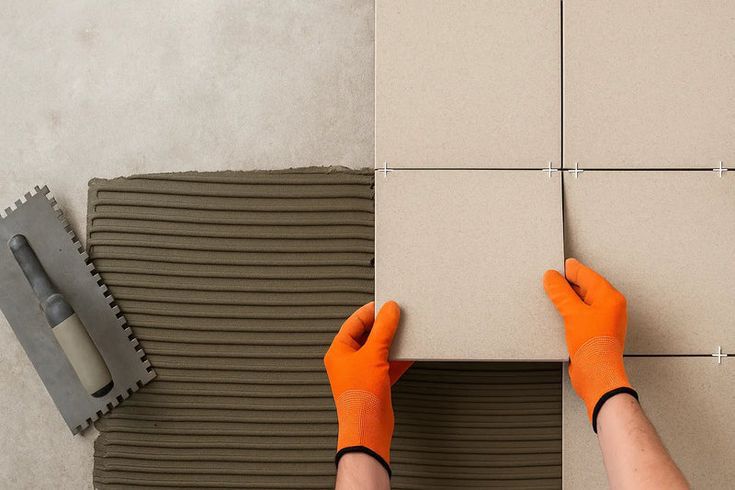
Ceramic tile on a standard internal floor may suit an entry-grade adhesive, but vitrified tile, low-absorption surfaces, wet zones, and slab-format installations raise the demand on bond strength and flexibility.
What changes the adhesive grade requirement?
The adhesive ladder rises when the installation becomes harder to support. Larger formats, denser tiles, vertical applications, wet areas, and more movement-sensitive substrates all push the specification toward stronger and more flexible grades.
Where standard-grade products still make sense
- Standard-grade products are suited to simpler internal applications with less movement and lower demand.
- They work best when the tile format is modest and the surface is stable and well prepared.
- They are usually a starting point, not the answer for every site condition.
When higher grades start to matter
- Mid-tier grades start becoming important when vitrified tile, wall application, and service exposure increase risk.
- Premium flexible grades matter when tiles are larger, substrates are more variable, or movement tolerance becomes critical.
- Wet zones and low-absorption tiles usually need stronger bonding confidence than basic dry-area ceramic work.
Questions to ask before you specify
Before selecting the adhesive, confirm the tile type, tile size, service exposure, application area, and expected movement. A clearer brief leads to a cleaner product choice and reduces the chance of mismatch on site.